“
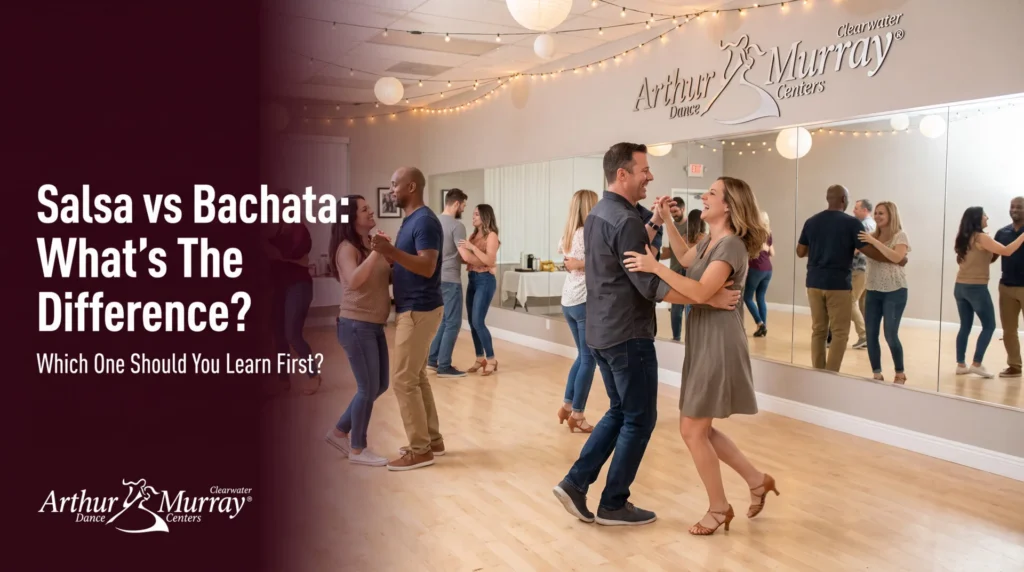
Salsa and bachata differ in three main ways: tempo, timing, and feel. Salsa is fast, danced on a quick 1-2-3, pause count, and moves in circles and turns. Bachata is slower, danced 1-2-3, tap in a side-to-side pattern, and stays close and grounded. Most beginners find bachata easier to start with.
Both dances are everywhere in Tampa Bay. Between Clearwater, St. Petersburg, and Tampa, you can find Latin socials most nights of the week, and the same crowd usually dances both. So the real question is not which dance is better. It is which one gets you onto the floor sooner.
Salsa vs Bachata at a Glance
Here is the short comparison. Read it once and the rest of this article will make more sense.
- Tempo. Salsa music typically runs fast and bright. Bachata runs noticeably slower, which gives you more time to think between steps.
- Basic count. Salsa uses three steps and a pause across eight beats. Bachata uses three steps and a hip tap, also across eight beats.
- Direction of travel. Salsa moves forward, back, and around a center point, with lots of turning. Bachata moves side to side in a small box of space.
- Partner connection. Salsa is often danced at arm’s length so partners can spin. Bachata is danced closer, with more shared weight and body movement.
- Feel. Salsa feels playful and energetic. Bachata feels smooth and romantic.
- Learning curve. Bachata gets you dancing socially faster. Salsa takes a bit longer but opens up more variety.
What Salsa Actually Feels Like
Salsa is built on a quick-quick-slow rhythm. You take three weight changes, then hold for one beat, then repeat with the other foot leading. That pause is the part beginners tend to rush, and it is also the part that makes the dance look effortless once you own it.
The music is fast, usually in the range where you feel the energy before you can count it. That speed is why salsa timing and count is the first real skill we teach. Once you can hear beat one reliably, everything else in salsa has a place to land.
Salsa also turns a lot. Underarm turns, cross-body leads, and changes of place come early in the learning process. If you like the idea of a dance that looks lively from across the room, salsa delivers that.
Who Salsa Suits
Salsa tends to click with people who already enjoy fast music, who want a dance with visible energy, and who do not mind spending a few weeks on timing before it feels natural. It also suits couples who want a shared project rather than a quick win.
What Bachata Actually Feels Like
Bachata is slower and closer. The basic pattern is three steps to one side, a tap or hip lift on the fourth beat, then three steps back the other way with a tap. That tap is the signature of the dance, and it is genuinely easy to hear in the music.
Because the tempo is relaxed, you have time to feel each step land. That is why so many first-time dancers get through a whole song on their first night. The bachata basic steps are forgiving in a way that builds confidence quickly.
Bachata also emphasizes connection over flash. Partners stay closer, movement comes from the body rather than the feet alone, and the dance rewards listening to your partner. Couples who came in wanting to feel more connected often end up loving bachata most.
Who Bachata Suits
Bachata suits total beginners, couples working on connection, engaged couples who want something warm for a wedding reception, and anyone who wants to feel competent quickly. Active adults often prefer it too, because the tempo is manageable and the footwork stays compact.
Is Bachata Easier Than Salsa?
Yes, bachata is generally easier to learn first. Three things make it more approachable:
- Slower tempo. More time between beats means more time to make decisions and recover from mistakes.
- Simpler travel pattern. Side to side is easier to control than turning around a partner in a crowded room.
- Clearer music. The beat in most bachata songs is easy to identify without training your ear first.
None of this makes bachata a lesser dance. Advanced bachata is subtle and demanding. It simply has a gentler on-ramp, which matters a great deal when you are standing at the edge of a dance floor for the first time.
Should You Learn Salsa or Bachata First?
Start with bachata if you want to be dancing socially in the shortest amount of time, if fast music makes you nervous, or if your main goal is connection with a partner. It is the most reliable confidence builder we teach on the Latin side.
Start with salsa if the fast, turning, energetic style is what drew you to Latin dance in the first place. Learning your goal dance keeps motivation high, and motivation matters more than difficulty.
Learn both if you plan to attend socials in Pinellas County or Tampa. Almost every Latin night alternates salsa, bachata, and often merengue across the evening. Knowing two dances roughly doubles the number of songs you can enjoy.
Our studio teaches dedicated bachata lessons in Clearwater alongside dedicated salsa instruction, so we are not steering you toward whichever one we happen to offer. We can look at your music taste, your goals, and your timeline, then recommend a starting point honestly.
How the Two Dances Help Each Other
Skills transfer between salsa and bachata more than beginners expect. What you build in one shows up in the other.
- Timing. Both dances organize movement across eight beats. Learning to find beat one in bachata makes finding it in salsa far less intimidating.
- Lead and follow. Clear communication through frame and hand pressure works identically in both dances.
- Turning technique. Spot and balance work learned in salsa cleans up bachata turns immediately.
- Musicality. Hearing the difference between a verse and a chorus changes how you dance to any Latin song.
This is the logic behind the Arthur Murray teaching method. Dances are taught as an interrelated system, so each new one builds on what you already know rather than starting from zero.
Latin Dancing in Clearwater and Tampa Bay
Tampa Bay has a large and active Latin dance community, and the weather means socials run year-round. That is good news for beginners, because it means regular chances to practice in a room full of people who were beginners themselves not long ago.
Social dancers here are generally welcoming. Nobody is watching your footwork as closely as you think. The most common thing new dancers tell us after their first social is that they wish they had gone sooner.
If you are searching for salsa dancing near me, the useful next step is not to memorize videos. It is to learn a solid basic with a partner who can correct you in real time, then take that basic out to a social night.
A Realistic First Month
Here is what progress usually looks like for an adult with no dance background.
- Week one. Basic step, posture, and hearing the beat. You will feel awkward, and that is normal.
- Week two. Basic in place plus a simple turn. The count starts feeling automatic.
- Week three. Combining two or three patterns and leading or following them cleanly.
- Week four. Dancing a full song with a partner you have never danced with before.
That last item is the real milestone. Once you can dance a full song with a stranger at a social, you are a dancer. Everything after that is expanding your range.
The Short Answer
Bachata first, salsa soon after, for most beginners. Bachata gets you dancing quickly and builds the confidence that makes salsa’s faster timing feel manageable rather than overwhelming.
If salsa is the dance you have always wanted, start there instead. Either way, you are one lesson away from knowing which one is yours. Don’t postpone your dream.
”