Returning to Social Dancing After Joint Replacement
-
Many adults do return to dancing after joint replacement. Published hospital guidance often places dancing later in recovery, once your surgeon says the joint is ready.
-
Partner dancing asks more of you than walking in a straight line. Turning, changing weight, and moving with another person are the parts to think through.
-
Your first dances back should be simple and controlled. Small steps, short sessions, and slow music make it easier to notice how the joint responds.
-
A structured lesson can make the return feel more manageable. The pace can stay with you, and the movements can be adjusted to fit your comfort.
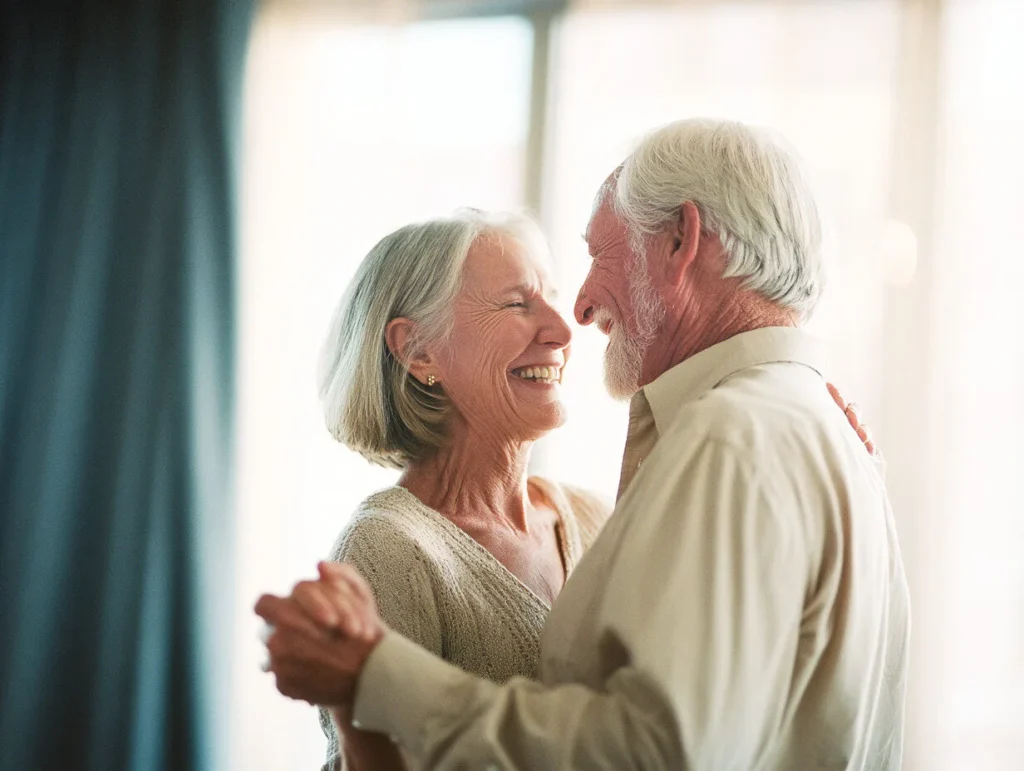
You are at a wedding reception in Clearwater, and a Foxtrot comes on. Your new knee or hip has handled grocery trips, walks in Countryside, and maybe the gym. Dancing with a partner still feels like a bigger step.
Adults in Dunedin, Palm Harbor, Safety Harbor, Largo, Oldsmar, and Tarpon Springs ask about dancing after knee replacement for a simple reason. Social dancing includes turning, backing up, and sharing movement with another person. That is different from walking forward on your own.
Below, you will find the published recovery markers, the dance movements that matter most, and a practical way to return without guessing.
How Soon Can You Dance After a Hip or Knee Replacement?
The Short Answer
Published hospital guidance often places dancing around 3 months after hip or knee replacement, once your surgeon says the joint is ready. Alberta Health Services, Cambridge University Hospitals NHS Foundation Trust, East Sussex Healthcare NHS Trust, and the Royal Orthopaedic Hospital all place dancing or ballroom dancing in that later return stage, with activity kept within your limits.
What Published Guidance Shows
Published hospital guidance usually places dancing in the later return phase after hip replacement.
These are the markers that show up most often in the sources:
-
Alberta Health Services lists dancing after hip replacement at 3 months, within your limits.
-
Cambridge University Hospitals NHS Foundation Trust says that by 12 weeks, most pain and swelling should have gone, and dancing may fit into regular day to day activity.
-
The Royal Orthopaedic Hospital includes ballroom dancing with low-impact sports that come back later in knee replacement recovery.
East Sussex Healthcare NHS Trust also places dancing in the gradual return stage after total hip replacement. The National Health Service, the public health system in England, notes that full recovery after a total knee replacement can take several months or longer, which is why your own surgeon and physical therapist matter more than any general timeline.
Why Dance Uses Different Forces
Walking, treadmill work, and partner dancing are not the same task. Dancing after hip replacement or dancing after knee replacement adds rotation, side travel, backing up, and the small pressure changes that happen when another person shares the movement with you.
In a lesson, one of the first things an instructor notices is whether the standing foot stays planted while the rest of the body twists. That is often the pattern that makes a returning dancer feel unsure, especially in Tango, Salsa, West Coast Swing, or a quick change of direction in Swing.
Returning to dance depends as much on the movement pattern as the date on the calendar.
A smooth Waltz around a clear floor in Clearwater gives you time to place each step. A crowded social night in Dunedin or Palm Harbor can ask for quick steering around other couples, which is a very different demand on a new joint.
Which Styles Are Easier to Scale
When adults ask about ballroom dancing after hip replacement, we usually start by looking at partner dance styles that can be made compact. One reason people ask about dance at all is that our page on the benefits of dancing describes it as low-impact and notes its focus on joint mobility and range of motion.
These dances often give an instructor more room to keep the movement small:
-
Waltz with short, even steps and modest turning.
-
Foxtrot with calm forward and side travel.
-
Rumba kept compact, with measured weight changes.
-
Nightclub 2-Step for steady timing and soft movement across the floor.
Salsa, Mambo, Swing, Lindy Hop, and Argentine Tango can still be good long term goals. They simply ask more from rotation, quick redirection, or floor pressure, so many adults bring them back after the smoother dances feel settled.
How Should You Return to Social Dancing in Clearwater?
Begin With Compact Patterns
If you are thinking about returning to dance after joint replacement, start with control. At Arthur Murray Clearwater, our teaching process uses private lessons and custom lesson plans that progress at your pace, which is especially useful when you are testing what feels comfortable.
This is a good order for a first return:
-
Bring your surgeon or physical therapist’s movement limits to the lesson.
-
Start with one dance and one small pattern.
-
Keep turns small, and avoid long passes across the room at first.
-
Stop while your movement still feels clean, then add time later.
For adults in Largo or Tarpon Springs, this approach takes the pressure out of the first session. The student should set the pace, and movement should be taught with the body in mind.
Rebuild Floorcraft With Support
Floorcraft, the skill of moving around other couples, is often the part people forget until they are back on a social floor. A private lesson lets you rehearse turns, pauses, and backing steps before the room gets busy. Then group dance classes and practice parties give you a calmer way to test those skills with other people around you.
These are the movement patterns many adults discuss with their medical team before they bring them back fully:
-
Fast twisting on a planted foot.
-
Repeated spins in place.
-
Sudden backward pulls from a partner.
-
Deep side lunges or dips.
-
Quick changes on a crowded floor.
If you are returning to Argentine Tango, Milonga, West Coast Swing, or Lindy Hop, this matters even more. Those dances can be taught in a controlled way, though social versions often speed up the very actions that feel hardest at first.
When to Wait
Wait to return if you do not yet have clear guidance from your surgeon or physical therapist, if swelling rises after normal daily activity, or if pain changes the way you walk. The same goes if curbs, stairs, or turning at home still feel uncertain.
If you have a wedding in Safety Harbor, a dinner dance in Oldsmar, or a holiday event in Clearwater on the calendar, there is still a middle ground. You can work on posture, timing, partner hold, and very simple weight changes without committing to full songs or faster traveling dances yet.
When that song starts, you want your attention on your partner and the music. A gradual return gives you a way to build back to that moment with less guesswork.
Plan Your Return in Clearwater
If you want a careful first step back onto the floor, talk with Arthur Murray Clearwater about a lesson paced to your comfort
Or call (727) 485-9169
External References
-
Arthur Murray, international ballroom and social dance organization
-
National Dance Council of America, which sanctions ballroom competitions in the U.S.
-
USA Dance, nonprofit organization for social and competitive ballroom dance