Here’s a scenario that plays out in dance studios everywhere. A student takes lessons faithfully, week after week, developing solid technique with an instructor who knows exactly how to guide them. They can execute the patterns beautifully in a lesson. And then they go to a wedding, someone asks them to dance, and everything falls apart — the confidence evaporates, the timing wobbles, and they leave wondering why all those lessons didn’t translate when it actually counted.
The missing ingredient isn’t more lessons. It’s the bridge between the lesson and the real world — and at Arthur Murray Clearwater, that bridge is the dance practice party. If you’ve never heard of them, they may be the most underrated part of learning to dance. And if you’re serious about becoming a dancer who can actually dance socially, not just perform patterns in a private lesson, they’re not optional. They’re where it all comes together.
What a Dance Practice Party Actually Is
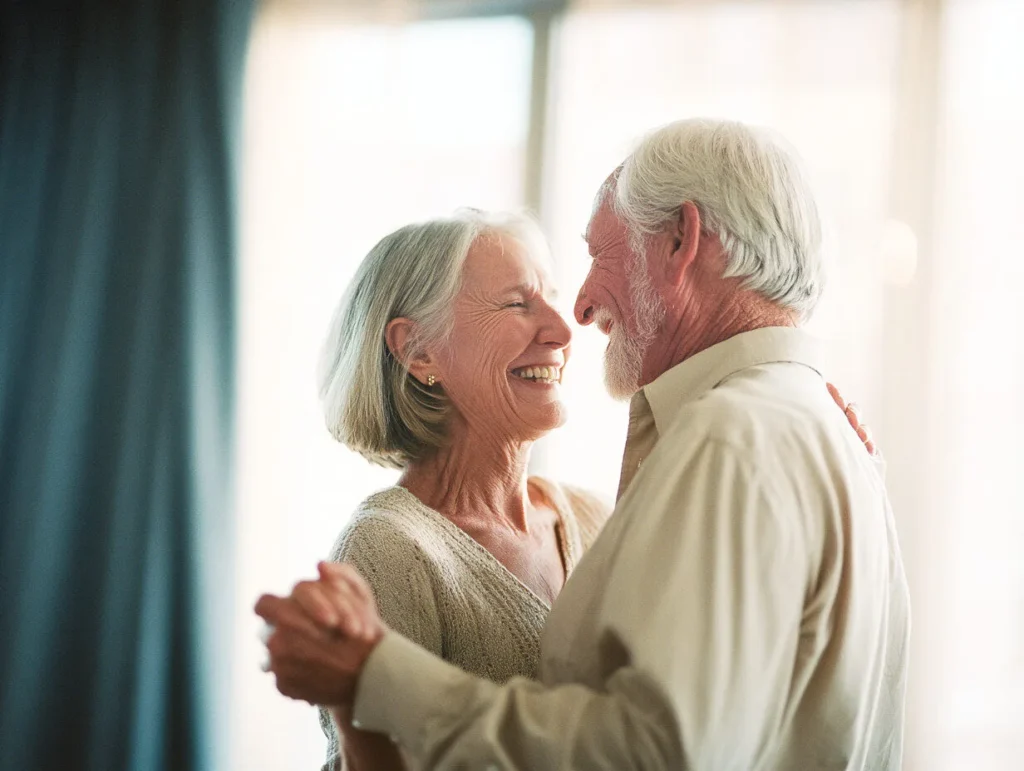
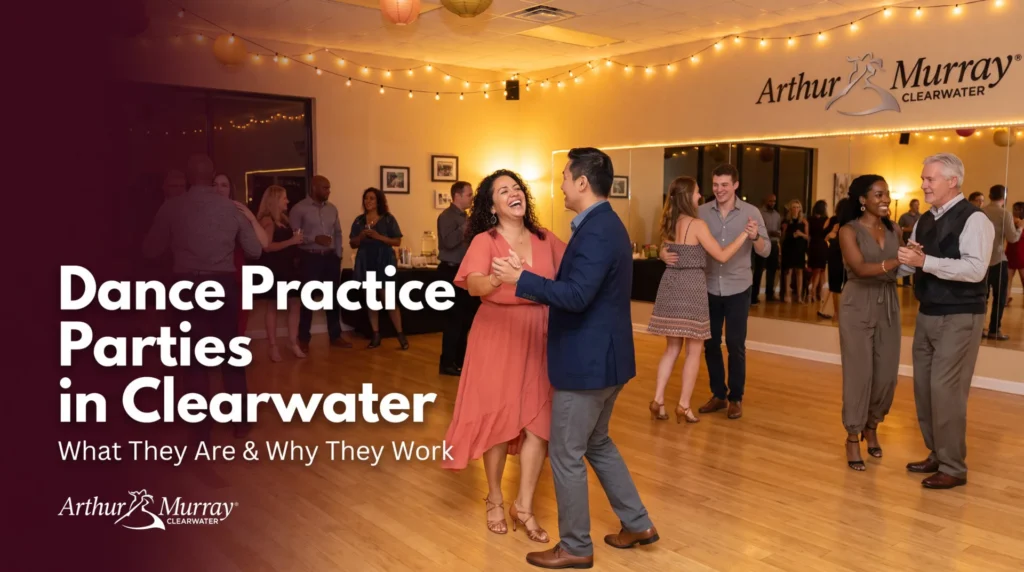
A dance practice party is exactly what it sounds like, though the name undersells it slightly. It’s a relaxed, social event held at the studio where students come together to dance — not in a structured lesson, not under instruction, but in an informal, low-pressure setting that simulates real-world social dancing. Music plays, students dance with one another, and the whole thing has the feel of a genuine social gathering rather than a class.
The critical distinction is that a practice party isn’t a lesson and it isn’t a performance. There’s no instructor breaking down a step, no pressure to get anything perfect, no audience evaluating you. It’s simply a room full of people at various stages of their dance journey, dancing socially, applying what they’ve been learning in an environment that’s forgiving, encouraging, and genuinely fun. For many students, it’s the part of the week they most look forward to — the moment where dancing stops being something they study and becomes something they do.
At Arthur Murray Clearwater, practice parties are woven into the studio’s culture as a core part of how students develop. They’re not an occasional bonus. They’re a recurring, integral element of the learning experience, designed specifically to give students the reps they need in a social setting to turn practiced technique into real dancing ability.
Why Practice Parties Accelerate Your Progress
The reason practice parties matter so much comes down to a fundamental truth about how dance skills develop: technique learned in a lesson and technique applied in a social setting are two different things, and the gap between them is enormous. Practice parties close that gap in ways that no amount of private lessons alone can achieve.
In a private lesson, you dance with your instructor — someone who reads your every signal perfectly, adjusts to compensate for your mistakes, and makes the dance feel smooth even when your technique isn’t. That’s exactly what you want in a lesson, because it lets you focus on learning. But it also means you’re dancing with the best possible partner in the most controlled possible environment. The real world is different. At a wedding, at a social event, on any actual dance floor, you’re dancing with partners who don’t compensate for you, in conditions you don’t control, with all the unpredictability that real social dancing involves. Practice parties give you exactly that experience — but in a safe, supportive environment where mistakes carry no consequence.
Dancing with different partners is where the real acceleration happens. In a practice party, you rotate through partners of varying skill levels and styles, which forces your technique to become genuinely reliable rather than dependent on one familiar person. A lead who can only lead his instructor hasn’t really learned to lead. A lead who can guide a partner he’s never danced with, clearly enough that she can follow, has developed a skill that actually holds up in the real world. Practice parties are where that skill gets built, because they demand it in a way that private lessons never can.
There’s also the pressure factor — the low-stakes version of it, which is exactly what you need. Social dancing involves a mild performance element: other people are around, the music is playing, and there’s a real-time demand to keep moving. Learning to dance under that gentle pressure, in an environment where nobody’s judging you and everybody’s rooting for you, builds the composure that makes real-world social dancing feel comfortable. By the time an actual wedding or event comes around, you’ve already danced socially dozens of times. The nerves that would otherwise derail you have long since faded, because you’ve been here before.
The Social Side: More Than Just Practice
While the skill development is the practical case for practice parties, there’s another dimension that students often end up valuing just as much: the community. Practice parties are where the social fabric of a dance studio comes to life, and for many students at Arthur Murray Clearwater, the relationships formed at these events become one of the most meaningful parts of the entire experience.
There’s something about learning a challenging skill alongside other people — laughing through the mistakes, celebrating the breakthroughs, sharing the particular camaraderie of people engaged in the same pursuit — that builds genuine connection. Students who came in knowing no one frequently find that practice parties turn strangers into friends, and that the studio becomes a social hub in their lives well beyond the dancing itself. For adults looking not just to learn to dance but to build community and social connection, practice parties deliver both at once.
Arthur Murray Clearwater’s studio environment is built for exactly this. The welcoming, supportive culture that makes lessons comfortable is the same culture that makes practice parties genuinely enjoyable. Nobody is made to feel out of place. Newer dancers are encouraged by more experienced ones, and the whole atmosphere is one of shared enjoyment rather than competition or judgment. It’s the kind of environment that turns a dance studio into a community, and practice parties are where that community is most alive.
What to Expect at Your First Practice Party
If you’re newer to dancing, the idea of a practice party can feel intimidating — the prospect of social dancing with people you don’t know, applying skills you’re still developing, can trigger exactly the nerves that keep people on the sidelines. It’s worth addressing that directly, because the reality is far more welcoming than the anticipation.
At your first Arthur Murray Clearwater practice party, expect a warm, unpressured atmosphere where everyone understands that you’re there to practice and grow. Nobody expects perfection — the entire point of the event is to work on your dancing in a social setting, which means mistakes aren’t just tolerated, they’re expected as a normal part of the process. More experienced dancers remember being where you are and tend to be encouraging rather than critical. You’ll dance the styles you’ve been learning, at whatever level you’re currently at, and you’ll leave having done something that advances your dancing in a way that no lesson could quite replicate.
Most students discover that their first practice party is far more enjoyable than they anticipated, and that it fundamentally changes their relationship to social dancing. The step from “I take dance lessons” to “I dance socially” is a significant one, and practice parties are where students make that leap. The confidence that comes from applying your skills in a real social setting — and finding that they actually work — is genuinely transformative, and it’s available at Arthur Murray Clearwater as a regular part of being a student there.
People Also Ask: Dance Practice Parties in Clearwater
What is a dance practice party?
A dance practice party is a relaxed, social event held at a dance studio where students dance with one another in an informal setting outside of structured lessons. It simulates real-world social dancing in a supportive, low-pressure environment, giving students the opportunity to apply what they’ve learned and build genuine social dancing ability.
How are practice parties different from dance lessons?
In a lesson, you dance with an instructor who guides and adjusts to you in a controlled setting. In a practice party, you dance socially with a variety of partners at different skill levels, in an unstructured environment that mirrors real-world social dancing. Practice parties develop the adaptability and confidence that private lessons alone can’t fully build.
Do I need to be an experienced dancer to attend a practice party?
No. Practice parties at Arthur Murray Clearwater welcome dancers at every level, including beginners. The atmosphere is supportive and encouraging, mistakes are understood as a normal part of learning, and more experienced dancers are typically welcoming to newer ones. The whole point is to practice and grow, not to perform.
Why do practice parties help you improve faster?
Practice parties force your technique to become reliable by having you dance with different partners in unpredictable, real-world conditions — rather than only with an instructor who compensates for your mistakes. This bridges the gap between technique learned in lessons and technique that actually works on a social dance floor. They also build composure under the gentle pressure of social dancing.
Do I need a partner to attend a dance practice party?
No. Practice parties involve dancing with a variety of partners throughout the event, so you don’t need to bring anyone. In fact, dancing with different partners is one of the primary benefits, as it develops the adaptability that makes your dancing genuinely social.
Are dance practice parties fun even if I’m nervous?
Most students find practice parties far more enjoyable than they anticipated, and that the initial nerves fade quickly in the welcoming atmosphere. Beyond the skill development, practice parties are where students build friendships and community, which many find to be one of the most rewarding parts of learning to dance.