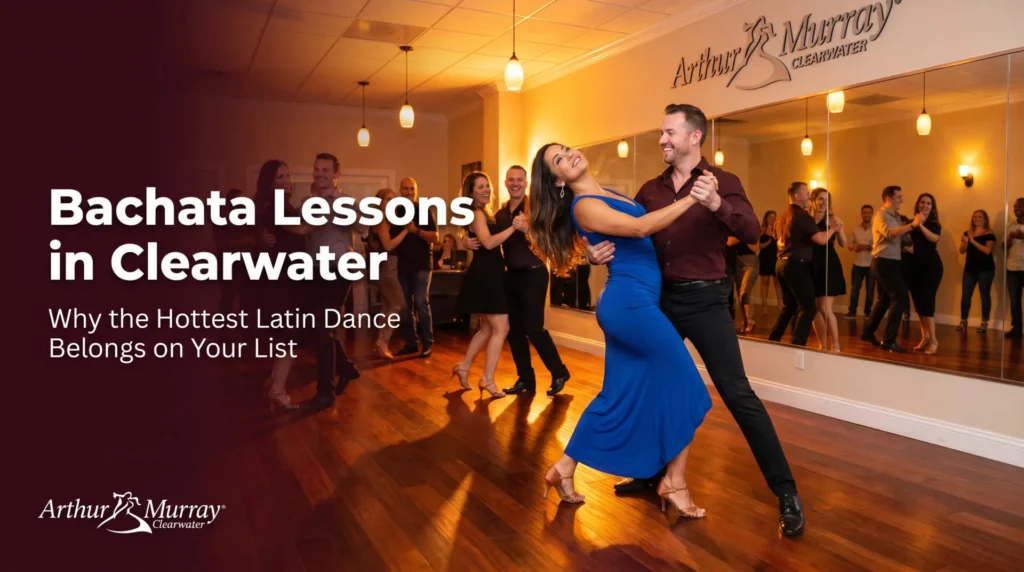
Walk into almost any Latin social dance night in the Tampa Bay area right now and you’ll notice something: the floor fills up fastest when the bachata comes on. Over the past decade, bachata has gone from a relatively niche Dominican style to one of the most danced social styles in the world — and the reason isn’t hard to understand once you’ve felt it. It’s sensual without being intimidating, structured enough for beginners to pick up quickly, and expressive enough to keep dancers coming back for years. If you’ve been watching bachata take over social dance floors and wondering whether you could learn it too, the answer is an emphatic yes.
Bachata lessons in Clearwater at Arthur Murray Clearwater give beginners a genuine entry point into this style — one built on solid technique rather than just imitation, so that what you learn actually holds up when you’re out on a real dance floor with a partner you’ve never met.
What Bachata Actually Is
Bachata originated in the Dominican Republic and is built on a simple, elegant four-count structure: three steps followed by a tap, with a characteristic hip movement on the tap that gives the dance its signature feel. That basic pattern — side to side, with a subtle pop of the hip — is what makes bachata so approachable for beginners. Unlike some Latin styles that front-load complex footwork or demanding timing, bachata’s foundation is genuinely learnable within a single lesson. Most students are moving to the rhythm and feeling the basic step within the first thirty minutes.
What distinguishes bachata from the other Latin dances is its combination of accessibility and sensuality. The dance is danced in a close partner connection, with smooth hip motion and romantic partner work that gives it an intimate, expressive quality. But that intimacy is built on a simple rhythmic structure, which means beginners aren’t overwhelmed by technical complexity while they’re still learning to feel comfortable in a close hold. The dance meets you where you are — easy enough to start, deep enough to grow into.
The music that drives bachata is romantic and melodic, built on a distinctive guitar-driven sound that’s instantly recognizable once you know what you’re listening for. Modern bachata has also absorbed influences from pop and R&B, which means the dance adapts to a wide range of contemporary music alongside traditional Dominican tracks. That versatility is part of why the style has spread so rapidly worldwide — it fits the music people are already listening to.
Why Bachata Is Taking Over Social Dance Floors
There’s a reason bachata has surged in popularity while other styles have stayed static, and it comes down to a rare combination of qualities. Bachata is one of the few social dances that’s simultaneously easy to start and endlessly expressive. Beginners can enjoy it almost immediately, which removes the frustrating barrier to entry that keeps people away from more technically demanding styles. But the dance also has enormous depth — advanced bachata dancers develop a vocabulary of body movement, musical interpretation, and partner connection that takes years to fully explore. That range means bachata rewards both the casual social dancer and the dedicated student, which is a big part of why its global community has grown so quickly.
The style’s sensual, connected character also fills a specific gap in the social dance landscape. Salsa is exhilarating but fast and spin-heavy, which can be intimidating for beginners. Bachata offers Latin dance connection and expressiveness at a more forgiving pace, in a closer hold, with a rhythm that’s easier to internalize. For a lot of students, it’s the Latin dance that finally makes them feel like a real social dancer — the one where the connection and the music click together and dancing stops feeling like work.
For students in Clearwater, this popularity has a practical upside: bachata is danced everywhere now. The Tampa Bay area’s active Latin social scene means students who develop bachata skills at Arthur Murray Clearwater have abundant real-world opportunities to use them, from regional Latin dance nights to studio socials to any event where the DJ knows what fills a floor.
Bachata at Arthur Murray Clearwater
At Arthur Murray Clearwater, bachata lessons follow the studio’s structured, progressive method — the same approach that produces genuine competence rather than memorized routines across every style the studio teaches. Your first lessons establish the basic side-to-side step, the four-count timing, and the fundamental hip movement that gives bachata its character. From there, lessons build into turns, direction changes, partner-work variations, and the kind of body movement and musicality that transform the basic step into genuine bachata.
The close connection that defines bachata is something Arthur Murray’s instructors are experienced at teaching in a way that feels comfortable rather than awkward for beginners. Dancing in a close hold is unfamiliar territory for a lot of new students, and instructors introduce it thoughtfully — building the physical communication of lead and follow gradually so that the connection develops naturally as the student’s confidence grows. Nobody is pushed into a level of closeness they’re not ready for. The intimacy of the dance emerges from correct technique and mutual comfort, not from being thrown into the deep end.
Private bachata lessons move at your pace, which lets the foundational hip movement and partner connection develop correctly rather than being rushed. Group classes and the studio’s practice parties give students the chance to apply their developing bachata in a social setting, rotating through different partners and building the adaptability that turns practiced technique into real social dancing. Because bachata’s basic structure is so approachable, students tend to reach the point where they can enjoy it socially faster than with most other Latin styles — which means the payoff arrives early and keeps the motivation high.
Bachata vs. Salsa: Which Should You Learn?
This is one of the most common questions students ask when exploring Latin dance classes in Clearwater, and the honest answer is that they’re very different dances serving different moods.
Salsa is fast, energetic, and built on spins and quick footwork — a high-energy dance that lights up a floor with movement and excitement. Bachata is slower, closer, and more sensual, built on connection and expressive hip movement rather than speed and spins. Salsa asks for quick reflexes and rhythmic urgency; bachata asks for smooth connection and musical feeling. Many beginners actually find bachata the easier entry point precisely because its slower tempo and simpler basic structure give them more room to feel comfortable before adding complexity.
Neither is better — and most dedicated Latin dancers learn both, because they offer such different experiences that having both in your repertoire lets you match whatever the music and the moment call for. If you’re drawn to high energy and spins, salsa may be your dance. If what appeals to you is close connection, sensuality, and a more forgiving learning curve, bachata is likely the place to start. Arthur Murray instructors can help you find the right entry point based on your goals, and many students who start with one end up loving both.
People Also Ask: Bachata Lessons in Clearwater
What is bachata dance?
Bachata is a Latin social dance that originated in the Dominican Republic, built on a four-count structure of three steps and a tap with characteristic hip movement. Known for its close partner connection and sensual, romantic quality, it has become one of the most popular social dances in the world over the past decade.
Is bachata easy to learn for beginners?
Yes — bachata is widely considered one of the most beginner-accessible Latin dances. Its basic side-to-side step and simple four-count timing are learnable within the first lesson, which makes it a popular entry point into Latin dance. The dance also has significant depth that develops over time.
What is the difference between bachata and salsa?
Salsa is fast, energetic, and built on spins and quick footwork, while bachata is slower, danced in a closer connection, and built on sensual hip movement and partner expression. Bachata is often easier for beginners because of its more forgiving tempo and simpler basic structure. Many students learn both.
Do I need a partner for bachata lessons?
No. Arthur Murray instructors partner with you in private lessons and teach both the lead and follow aspects of the dance. Group classes rotate partners throughout the session. Many students begin bachata solo and bring a partner in later.
Is bachata a romantic dance?
Bachata is known for its close connection, smooth hip movement, and romantic, sensual character, which makes it one of the more intimate Latin social dances. Arthur Murray instructors teach the close connection thoughtfully so beginners develop comfort with it gradually and naturally.
How long does it take to learn bachata?
Most students develop a confident basic bachata within the first few lessons and reach social-level comfort — where they can dance at a Latin social night without feeling lost — within a few months of consistent instruction. Because the basic structure is so approachable, bachata often reaches enjoyable social competence faster than other Latin styles.
Ready to Try Bachata Lessons in Clearwater?
Arthur Murray Clearwater offers a free introductory lesson for new students — a low-pressure way to feel the bachata rhythm, experience the connection that’s made it a global phenomenon, and find out how quickly you can go from curious to dancing.
Reach out to Arthur Murray Clearwater to ask about the current intro offer and take the first step onto the floor.