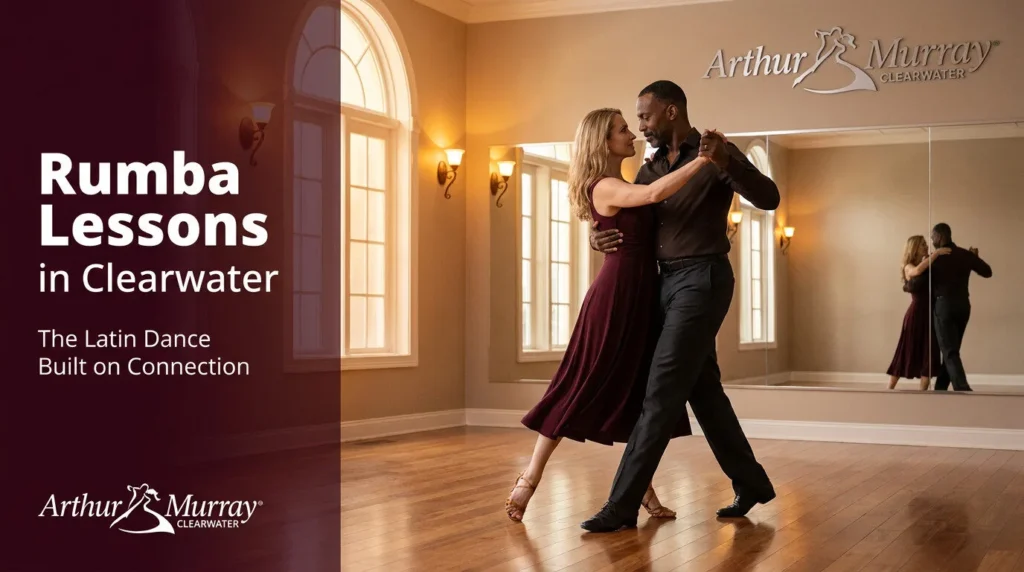
Most Latin dances are about energy. The salsa moves fast, the cha cha is playful and punchy, the samba bounces with joy. The rumba is the one that slows everything down — and in doing so, becomes something the faster dances can’t quite reach. It’s the dance of feeling rather than spectacle, of connection rather than performance, and for a lot of students at Arthur Murray Clearwater, it ends up being the one that stays with them longest.
If you’ve been drawn to Latin dance but suspected that the high-energy styles weren’t quite what you were looking for — if what appeals to you is something slower, more expressive, more about the relationship between two people than the speed of the footwork — rumba lessons in Clearwater may be exactly the entry point you’ve been searching for.
What the Rumba Actually Is
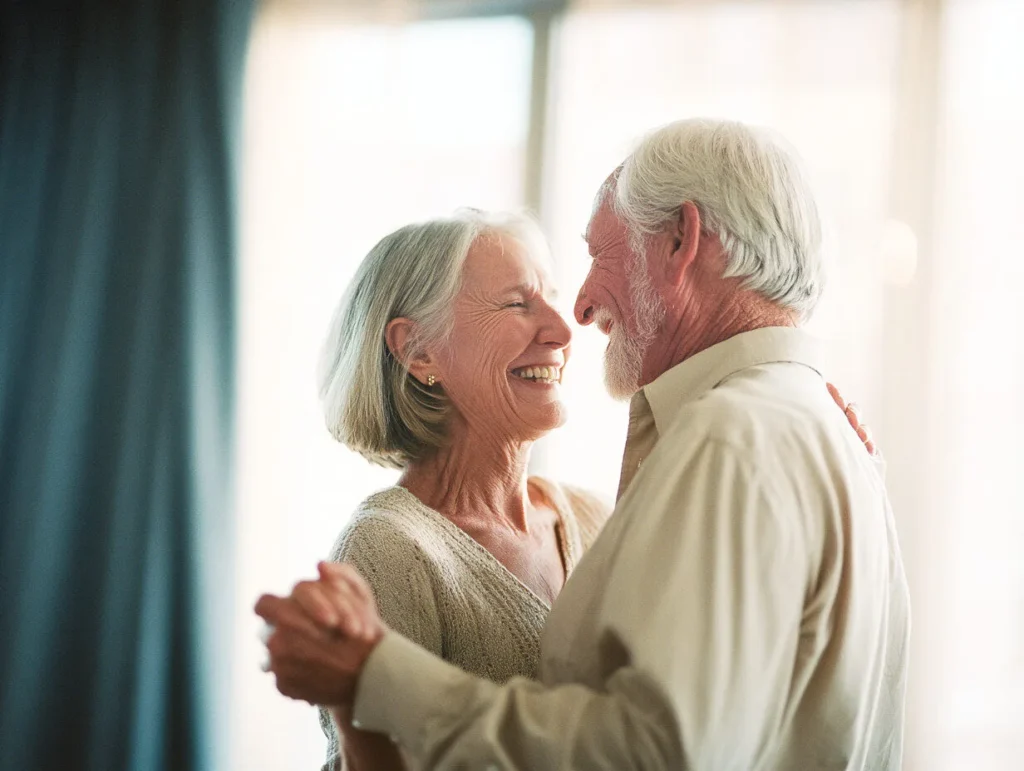
The rumba is the slowest of the Latin ballroom dances, often called the dance of love for reasons that become obvious the moment you see it danced well. It’s built on smooth, deliberate hip movement — what instructors call Cuban motion — and a quality of partner connection that gives the dance its characteristic intimacy and emotional weight. Where the cha cha is crisp and the salsa is urgent, the rumba is fluid and unhurried, every movement given time to fully express itself.
Technically, the rumba is danced in a compact space rather than traveling across the floor, which makes it particularly well-suited to social settings and beginner learning alike. The basic pattern is built on a slow-quick-quick rhythm, with weight transfers that allow the hips to move naturally through each step. That hip movement is the soul of the dance — it’s what transforms a sequence of steps into something that reads as genuinely romantic and expressive rather than merely technical.
The music that accompanies the rumba is slow, melodic, and emotionally rich, ranging from classic Latin ballads to contemporary songs with the right tempo and feeling. Because the rumba moves at a pace that gives dancers room to breathe, it’s one of the styles where students most quickly develop a sense of musicality — the ability to interpret and respond to the music rather than just stepping in time with it.
Why the Rumba Is Built for Connection
Every partner dance involves two people, but the rumba makes the relationship between them the entire point. The slow tempo means there’s nowhere to hide behind speed or flashy footwork — the quality of the dance lives almost entirely in the connection between partners, in the way intention is communicated through the hold, in the responsiveness of the follow to the lead and the clarity of the lead to the follow. This makes the rumba one of the most rewarding dances for developing genuine partner connection, and one of the most meaningful for couples to learn together.
That same quality also makes it a remarkable teacher of fundamentals. Because the rumba moves slowly, there’s time to feel what’s actually happening in the dance — time to notice when your weight isn’t fully transferred, when your frame collapses, when your lead is ambiguous. The faster dances let students paper over these issues with momentum. The rumba doesn’t. It exposes them gently and gives students the time and space to correct them, which is part of why instructors at Arthur Murray Clearwater often consider it one of the most valuable styles for building solid Latin dance technique. A student with a good rumba tends to have good fundamentals across every Latin style they pursue afterward.
The Rumba for Couples
It’s worth speaking directly to couples, because the rumba has a particular significance for people learning to dance together. The dance’s emphasis on connection, communication, and responsiveness mirrors the dynamics of a healthy relationship in ways that couples often find both surprising and meaningful. Learning to lead with clarity rather than force, learning to follow with trust rather than anticipation — these are not only dance skills. They’re relationship skills, practiced in a physical form, and couples who work on the rumba together frequently describe the experience as valuable in ways that extend well beyond the studio.
There’s also the simple romance of it. The rumba is slow, intimate, and expressive — the kind of dance that creates a genuine moment between two people rather than just a shared activity. For couples looking for something to do together that deepens their connection rather than just occupying an evening, the rumba offers something most date-night options can’t. And for couples preparing for a wedding, the rumba’s romantic character and manageable tempo make it a popular choice for a first dance that feels personal and emotionally resonant.
Rumba at Arthur Murray Clearwater
At Arthur Murray Clearwater, rumba lessons follow the studio’s structured, progressive teaching method, with each element building on the one before it. Your first lessons typically establish the basic box step, the slow-quick-quick rhythm, and the foundational hip movement that gives the dance its character. From there, lessons expand into turns, directional changes, and the kind of expressive combinations that let students begin to interpret the music rather than just execute steps.
The hip movement that defines the rumba is something that develops gradually, and Arthur Murray’s instructors are experienced at teaching it in a way that feels natural rather than forced. Cuban motion is one of those things that can’t be rushed — it comes from correct weight transfer and a relaxed, grounded quality of movement that develops over time. Instructors introduce it patiently, building it into the foundational steps so that it emerges organically as the student’s technique matures rather than being performed self-consciously on top of the footwork.
Private rumba lessons move at your pace, which matters especially for a dance this nuanced. The rumba rewards attention to detail, and the private lesson format gives students the focused, one-on-one feedback that allows that detail to develop correctly. Group classes and the studio’s practice parties give students the chance to apply their developing rumba in a social setting, dancing with different partners and building the adaptability that turns practiced technique into genuine social dancing. The rumba’s slow tempo makes it one of the more approachable styles for beginners at these social events, which means students have real opportunities to use the dance well before they consider themselves advanced.
Rumba vs. Salsa: Understanding the Difference
Students researching Latin dance classes in Clearwater frequently wonder how the rumba relates to the more widely known salsa, and the distinction is worth clarifying because the two dances offer genuinely different experiences.
Salsa is fast, energetic, and celebratory — a dance of spins, quick footwork, and high-energy social interaction. It’s exhilarating, and for many students that energy is exactly the appeal. The rumba is its emotional opposite: slow, intimate, and expressive, built on connection and feeling rather than speed and spectacle. Where salsa lights up a dance floor with energy, the rumba creates a quieter, more personal moment between partners.
Neither is better — they serve completely different purposes, and many students learn both precisely because they offer such different experiences. If you’re drawn to high energy and social excitement, salsa may be your dance. If what appeals to you is romance, expression, and deep partner connection, the rumba is likely what you’ve been looking for. Arthur Murray instructors can help you identify which style fits your temperament and goals, and many students discover that having both in their repertoire gives them the range to match whatever the music and the moment call for.
People Also Ask: Rumba Lessons in Clearwater
What kind of dance is the rumba?
The rumba is the slowest of the Latin ballroom dances, known for its smooth hip movement, romantic character, and emphasis on partner connection. Often called the dance of love, it’s danced in a compact space with a slow-quick-quick rhythm and a fluid, expressive quality that distinguishes it from faster Latin styles.
Is the rumba hard to learn?
The rumba’s slow tempo actually makes the basic pattern quite accessible for beginners. The hip movement that gives the dance its character takes time to develop, but Arthur Murray instructors teach it progressively so it emerges naturally. Many instructors consider the rumba one of the best styles for building solid Latin dance fundamentals.
Is the rumba a good dance for couples?
Yes — the rumba is one of the most popular dances for couples to learn together. Its emphasis on connection, communication, and responsiveness mirrors the dynamics of a healthy relationship, and its romantic character makes it especially meaningful. It’s also a popular choice for wedding first dances.
Do I need a partner for rumba lessons?
No. Arthur Murray instructors partner with you in private lessons. Group classes rotate partners throughout the session. Many students begin rumba solo and bring a partner in later once they have foundational technique.
What is the difference between the rumba and salsa?
Salsa is fast, energetic, and built on spins and quick footwork, while the rumba is slow, intimate, and built on connection and expression. They offer very different experiences, and many students learn both. The rumba is generally considered the more romantic and expressive of the two.
How long does it take to learn the rumba?
Most students develop a confident basic rumba within the first several lessons and reach social-level comfort within a few months of consistent instruction. The Cuban hip motion and musicality that give the dance its depth continue developing over time, making it a style that rewards ongoing practice.
Ready to Try Rumba Lessons in Clearwater?
Arthur Murray Clearwater offers a free introductory lesson for new students — a low-pressure way to experience the rumba firsthand, feel what makes it the most romantic of the Latin dances, and find out whether this is the style you’ve been looking for.
Reach out to Arthur Murray Clearwater to ask about the current intro offer and take the first step onto the floor.